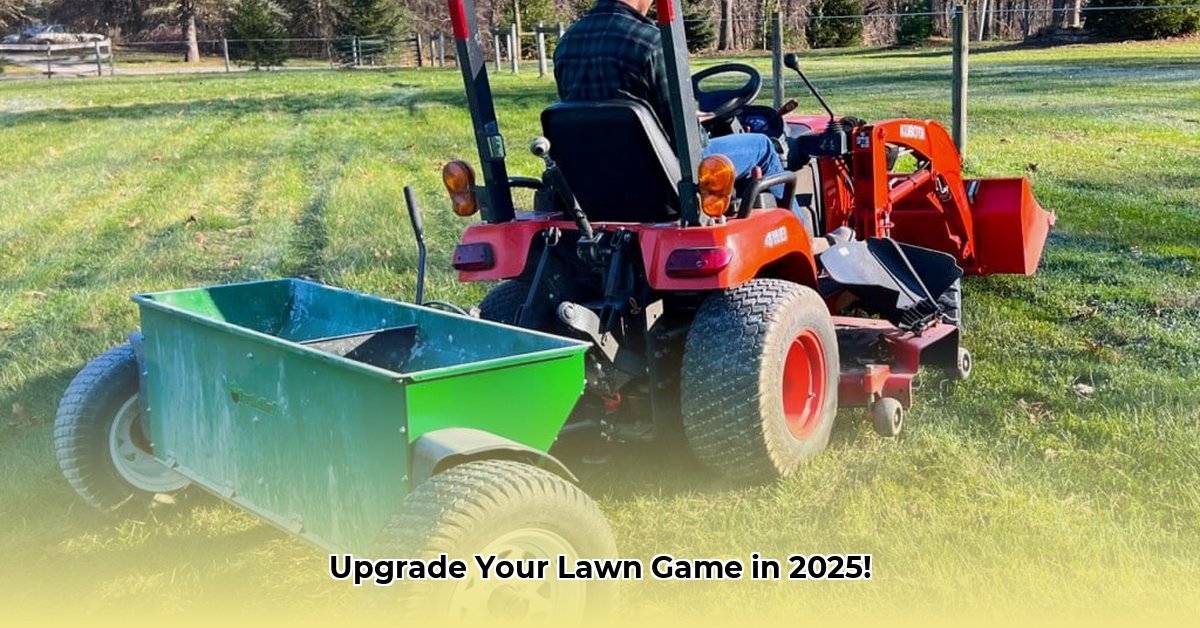
Choosing the right fertilizer spreader can make or break your lawn care efforts. This comprehensive guide helps you navigate the options, ensuring you select the perfect spreader for your lawn tractor and your yard's unique needs. We'll cover everything from spreader types to essential features, empowering you to make an informed decision. For more information on tractor supply broadcast spreaders, check out this resource.
Understanding Your Lawn: The Foundation of Spreader Selection
Before diving into specific spreaders, a thorough assessment of your lawn is paramount. Consider these key factors:
Lawn Size: A small yard requires a different approach than several acres. Smaller lawns might benefit from a push spreader, while larger ones necessitate a tow-behind model for your lawn tractor.
Terrain: Rolling hills or uneven terrain demand a spreader with maneuverability and precision. Flat lawns allow for the use of high-speed broadcast spreaders.
Obstacles: Trees, flower beds, and other obstacles influence spreader choice. Maneuverability becomes critical in navigating these challenges.
Fertilizer Type: Different fertilizer types (granular, liquid) require compatible spreaders. Choose a spreader that is designed for the fertilizer you intend to use.
Spreader Types: Broadcast vs. Drop Spreaders
Two primary spreader types cater to different needs:
Broadcast Spreaders: These spread fertilizer widely, ideal for large, relatively flat lawns requiring even coverage. They prioritize speed and efficiency but may be less precise on uneven terrain.
Drop Spreaders: These spread fertilizer in a more targeted manner, allowing for precise placement and reduced waste. They are more suitable for smaller lawns, uneven terrain, and when precise application is needed near obstacles.
Hopper Capacity: How Much Fertilizer Can You Manage?
The hopper's size—the container holding fertilizer—directly impacts efficiency. Consider your lawn's size:
Larger Hoppers: Best suited for larger lawns, minimizing refill interruptions and maximizing work time.
Smaller Hoppers: Suitable for smaller lawns, offering greater maneuverability, but requiring frequent refills.
Mounting Options: Tow-Behind or Push?
The mounting method significantly impacts ease of use and lawn coverage:
Tow-Behind Spreaders (for lawn tractors): Offer superior efficiency for large lawns, seamlessly integrating into your mowing routine. However, they may be less maneuverable in tighter spaces.
Push Spreaders: Provide greater maneuverability, perfect for smaller yards with obstacles. They are also an option if you don't have a lawn tractor.
Material Matters: Durability vs. Cost
The spreader's material impacts both durability and cost:
Plastic Spreaders: Lighter, more affordable, but potentially less durable in harsh conditions.
Steel Spreaders: More robust and longer-lasting but come with a higher initial cost. Weigh the long-term cost versus initial investment.
Key Features for Optimal Performance
Several features enhance a spreader's performance and user experience:
Calibration: Accurate calibration ensures even fertilizer distribution, preventing over- or under-fertilization. Look for easy-to-use calibration systems.
Ease of Use: Simple controls and user-friendly design save time and effort.
Warranty: A good warranty reflects the manufacturer's confidence in their product's quality and durability.
Step-by-Step Guide to Choosing Your Spreader
Assess Your Lawn: Carefully analyze your lawn's size, terrain, obstacles, and fertilizer type.
Select Spreader Type: Choose between broadcast or drop, considering your lawn's characteristics.
Determine Hopper Size: Match hopper capacity to your lawn's size; larger lawns need larger hoppers.
Choose Mounting Method: Decide between tow-behind or push based on your lawn tractor and yard layout.
Select Material: Consider cost and durability when choosing between plastic and steel.
Prioritize Key Features: Pay attention to calibration accuracy, ease of use, and warranty.
Read Reviews: Consult online reviews to gauge real-world performance and user experiences.
Fertilizer Spreader Comparison Table
| Feature | Tow-Behind Broadcast | Tow-Behind Drop | Push Broadcast | Push Drop |
|---|---|---|---|---|
| Ideal Lawn Size | Large | Medium to Large | Small to Medium | Small |
| Fertilizer Capacity | High | Medium to High | Medium | Low |
| Maneuverability | Low | Low | High | High |
| Typical Cost | High | Medium to High | Medium | Low |
Remember, the perfect spreader is the one that aligns perfectly with your specific needs. Prioritize your lawn's characteristics and your personal preferences for optimal results. Happy spreading!